Buying land near Yamhill can feel exciting right up until you realize a pretty parcel and a buildable parcel are not always the same thing. If you are hoping to turn raw dirt into a future homesite, the real work starts long before construction does. This guide will help you understand what matters most in Yamhill, what questions to answer before you make an offer, and how to spot issues early so you can move forward with more confidence. Let’s dive in.
Start With Zoning First
In and around Yamhill, zoning is the first filter for any land purchase. A parcel may look perfect on a map, but that does not mean a home can be built there by right.
Yamhill County separates rural land into different zoning categories with different purposes. VLDR districts are intended for rural residential development with basic services like local-road access, individual domestic wells, sewage disposal systems, and rural fire protection. EFU zoning is meant to protect agricultural land, which means nonfarm residential development is limited or prohibited, while AF-10 is a transitional rural-residential zone that can allow low-density homesites along with small-scale farm and forestry activity.
That difference matters more than many buyers expect. The county’s planning system includes separate applications for lot of record, non-farm dwelling, principal farm dwelling, secondary farm dwelling, partition, and subdivision, which shows that buildability often depends on legal history and zoning status, not just acreage.
Why a Homesite Look Can Mislead
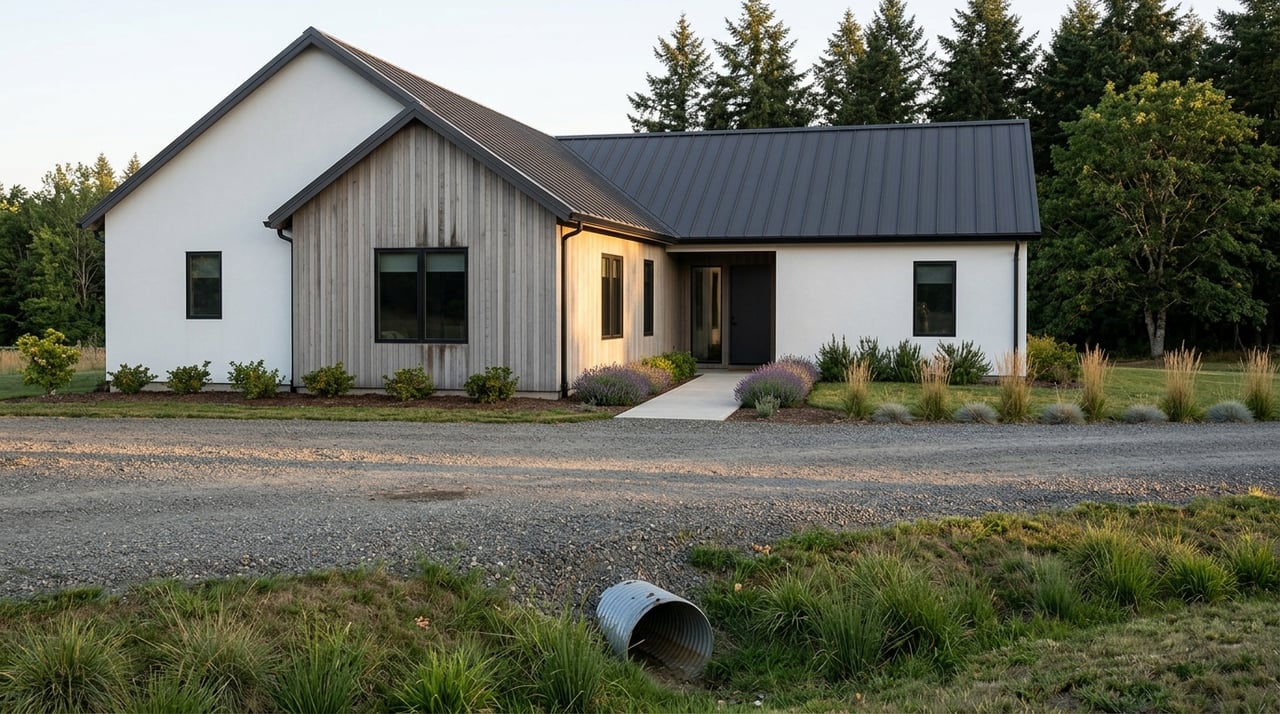
Rural parcels often look open, level, and ready for a house. But if the zoning or lot status does not support a dwelling, that appearance can be misleading.
Before you focus on views, privacy, or shop space, you need to know what the parcel legally allows. In many land purchases near Yamhill, this step is where the real answer starts.
Know Whether You Are In The County Or City
The approval path changes depending on where the property sits. If the parcel is in unincorporated Yamhill County, the process generally runs through county departments.
For those parcels, a building permit typically depends on land use approval, subsurface sewage disposal approval, driveway approval, and building plan approval. If the property is inside the City of Yamhill, land use approval starts with the city planning department, and city forms and site plans are required before the building official can issue permits.
Why Jurisdiction Changes The Process
This is one reason local land guidance matters. Two parcels with similar size and surroundings can have different approval paths simply because one is inside city limits and the other is not.
If you are comparing options near Yamhill, make sure you know which rules apply before you estimate timeline, cost, or difficulty. That can save you from surprises after mutual acceptance.
Access, Water, Septic, And Fire Can Make Or Break It
Once zoning looks promising, the next set of questions usually decides whether a parcel is truly practical to build on. In rural Yamhill County, access, water, septic, and fire requirements are often the biggest hurdles.
The county requires driveway improvements to be safe, passable, and adequate for fire-protection equipment before a building permit is issued. Driveway approval must also be obtained through Public Works, and any new access onto a county road or state highway needs approval from the appropriate department.
The county’s plot-plan requirements also call for details that many buyers do not think about at first. These can include easements of record, driveway location and width, septic tank and drainfield locations, and flood elevations if the site is in a floodplain.
Water Is More Than “There’s A Well”
If a parcel has an existing well, do not assume that is enough information. Oregon well reports have been required since 1955 and can show details such as depth, casing, flow rate, and water level.
That makes the well report an important due diligence item. If the seller says there is a well, you will want to know what the record shows rather than rely on assumptions.
Septic Takes Time And Soil
Septic approval in Yamhill County uses a two-step process. First comes a site evaluation with test holes dug by the applicant, then a permit to install the tank and drainfield.
The county says to allow up to six weeks for processing before a septic installation permit is issued. Existing systems can also trigger an evaluation, especially if you plan to build on a parcel of three acres or less or if financing requires it.
Fire Access Is Part Of The Equation
Rural land buyers often focus on where a home could sit, but fire access matters too. County fire-access and water-supply guidance says an approved water supply capable of supplying required fire flow must be provided where required.
In areas without hydrants or a reliable water supply, a fire-water plan may be needed. That means a long driveway or remote setting can affect more than convenience. It can change the approval path and the cost to get build-ready.
Legal Access And Easements Deserve Early Attention
One of the most important land lessons is this: recorded rights matter. Yamhill County notes that legal descriptions, not street addresses or tax lot numbers, control the recorded land record.
That means you should review the deed, legal description, easements, and any available survey information early in the process. A parcel can seem straightforward online while still having access or boundary questions that affect how it can be used.
Why This Matters Before Closing
If legal access is unclear, you do not want to discover that after you own the land. The same goes for easements that affect a future driveway, utility placement, or building area.
A careful title and easement review can help you understand whether the land works the way you think it does. On rural property, that step is not optional due diligence. It is basic protection.
Watch For Floodplain, Slopes, And Site Costs
Not every build challenge is legal. Some are physical, and they can change your budget fast.
Yamhill County has a floodplain overlay district for areas of special flood hazard, and construction or development in those areas requires a floodplain development permit. The county’s plot-plan checklist also asks applicants to show flood elevations when the site is in a floodplain.
Slopes and soils matter just as much. The county’s land-use brochure warns that slopes can dramatically increase construction and road-building costs, and the plot-plan checklist calls for verification when land is near a 20% slope break.
Similar Parcels Can Have Very Different Costs
This is where rural land can get tricky. Two parcels may have similar size, similar views, and similar asking prices, but one may cost much more to improve because of slope, access, or drainage conditions.
That is why buying land near Yamhill is not just about purchase price. It is also about what it will take to make the site usable.
Check Future Division Plans Before You Buy
If you may want to split the property later, research that before closing. Yamhill County has separate processes for lot line adjustments, partitions, subdivisions, and lot-of-record questions.
The county’s land-division rules define a partition as dividing land into two or three parcels within a calendar year. That means future flexibility depends on the parcel’s current status, zoning, and the county path that applies.
Do Not Assume Acreage Equals Opportunity
Many buyers see extra land as future upside. Sometimes that works out, and sometimes county rules limit what can happen next.
If resale strategy or future division is part of your plan, it is much better to confirm the likely path before you buy than to discover limits later.
A Realistic Timeline From Raw Dirt To Build-Ready
Buyers often underestimate how long this process can take. In unincorporated Yamhill County, a practical sequence is usually to verify zoning and legal access first, then complete land-use approval, then septic site evaluation, then driveway approval, then building plan review and permit issuance.
The county notes that land-use approval can be immediate if the use is allowed outright, but other cases can take several weeks. Septic approval can take up to six weeks, and building-plan checks generally take about four weeks.
That means a parcel that is not already build-ready can easily take months to become shovel-ready. The timeline depends on what the parcel is today, not just on what you want it to become.
Smart Questions To Answer Before You Make An Offer
If you are serious about buying land near Yamhill, you should be able to answer a few key questions before moving forward.
- What is the current zoning, and does it allow a dwelling by right or only through an application?
- Is there recorded legal access, and does the driveway already meet county fire-access standards?
- Is water provided by a usable well, a community system, or something that still needs approval?
- Has the septic site been evaluated, and is there enough suitable area for a drainfield?
- Is the parcel in a floodplain or on steep ground that could raise cost or limit construction?
- If you want to divide the land later, what county land-division path applies?
These questions can help you sort workable opportunities from risky ones. They also help you compare parcels based on facts, not just first impressions.
Why Local Guidance Matters On Rural Land
Land near Yamhill can offer space, privacy, and long-term potential, but it also asks more from buyers. You need to understand how planning, public works, septic review, access standards, and fire requirements fit together before you can confidently move from raw dirt to build-ready.
That is where hands-on local guidance can make a real difference. Chandler Willcuts helps buyers navigate rural property decisions with the same white-glove attention he brings to every transaction, whether you are buying a homesite, acreage, or a more complex land opportunity. If you are looking at land near Yamhill and want a clear plan before you make a move, connect with Chandler Willcuts.
FAQs
What does buildable land near Yamhill actually mean?
- In practical terms, it usually means the parcel can move through the required approval steps for a home, which may include land use approval, septic approval, driveway approval, and building plan approval.
What zoning should you check when buying land near Yamhill?
- You should confirm the parcel’s current zoning and whether that zoning allows a dwelling by right, limits residential use, or requires a specific application path such as a non-farm dwelling or lot-of-record review.
What septic steps apply to rural land in Yamhill County?
- Yamhill County uses a two-step septic process that starts with a site evaluation using test holes and then moves to a permit for installing the tank and drainfield.
Why is driveway approval important for Yamhill County land?
- Driveway approval matters because the county requires access to be safe, passable, and adequate for fire-protection equipment before a building permit can be issued.
How can floodplain or slope affect land near Yamhill?
- Floodplain status can trigger additional permit requirements, and steep slopes can raise construction and road-building costs significantly.
Can you split a parcel later after buying land near Yamhill?
- Maybe, but you should verify that before closing because future division depends on the parcel’s zoning, legal status, and the specific county land-division process that applies.