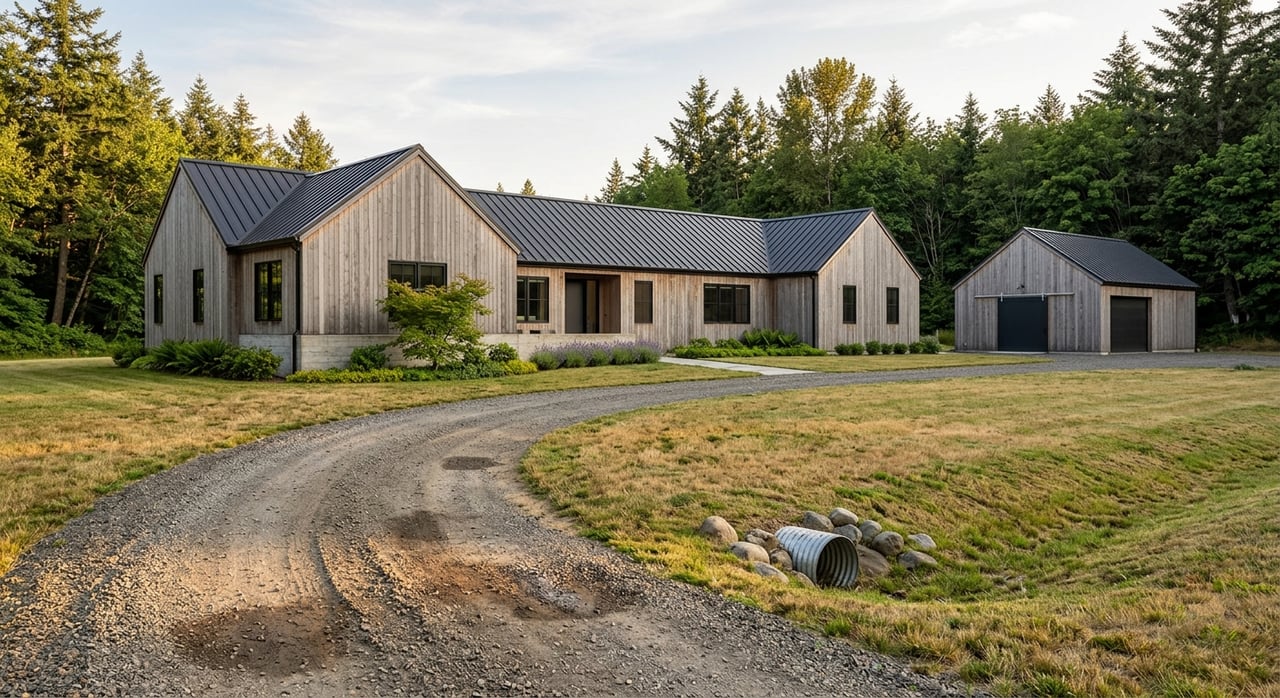
Dreaming about a little more elbow room near Yamhill? Acreage living can offer privacy, flexibility, and a true Willamette Valley lifestyle, but it also comes with responsibilities that surprise many buyers at first. If you are considering land outside town, it helps to understand how zoning, access, utilities, and seasonal upkeep can shape your day-to-day experience. Let’s dive in.
Why Yamhill Acreage Feels Different
Yamhill is a small farming town in Willamette Valley wine country, and the surrounding area reflects that setting. According to the City of Yamhill, the city was incorporated in 1891 and has about 1,199 residents, while the broader county includes a mix of valley floor, foothills, farmland, and commercial timberland.
That matters because acreage around Yamhill is not one-size-fits-all. One property may be mostly open ground, while another may be wooded, sloped, or shaped by a long driveway and private access road. If you are used to comparing homes in subdivisions, rural properties often require a different way of thinking.
Parcel Size Is Only Part of the Story
When buyers start looking at acreage, the first question is often, “How many acres do I need?” In Yamhill County, the better question is usually, “How usable is the land, and what does the zoning allow?”
Yamhill County explains in its land-use brochure that land use is regulated through zoning and building rules. Farm and forest zones are intended to protect land resources, while rural residential zones are intended for county homes. In farm and forest zones, a new dwelling generally requires county application approval. In rural residential zones, a new dwelling on a vacant lot is generally permitted without that approval.
The county’s VLDR zoning standards also set minimum parcel sizes of 5 acres in VLDR-5, 2.5 acres in VLDR-2, and 1 acre in VLDR-1. That means a property’s zoning and parcel configuration can affect your options just as much as the acreage number in the listing.
What this means for buyers
A manageable property is not always the smallest one. A five-acre parcel with gentle terrain and easy access may feel simpler to own than a smaller parcel with steep slopes, drainage issues, or dense vegetation.
The county also notes that floodplains and steep slopes can increase construction and road-building costs. So when you compare acreage properties around Yamhill, it is smart to look beyond lot size and ask how the land actually functions.
Expect More Car Dependency
If you are moving from a more in-town setting, acreage living around Yamhill will likely feel more car-dependent. The city’s hazard planning document notes that motor vehicles are the dominant travel mode in Yamhill, though county transit route 33 connects Yamhill with Forest Grove and McMinnville.
That can be a plus if you value privacy and space. Still, it is worth thinking through your regular drive times, road conditions, and how often you want to head into town for errands, appointments, or commuting.
Access Matters More Than Many Buyers Realize
On rural property, the road in can be just as important as the home itself. Yamhill County’s public and private road standards require private roads to have at least a 12-foot travel width and 14-foot vertical clearance, and longer roads may need turnouts and turnarounds.
The county’s wildfire planning also states that driveway improvements must be safe and passable before a building permit is issued. Emergency access is a major concern, especially on longer or more isolated driveways.
Road upkeep is part of ownership
Yamhill County Public Works maintains more than 700 miles of roads, including about 400 paved miles and 300 gravel miles. It also notes that gravel roads need regular grading and rocking, which gives you a good picture of what rural road maintenance can involve.
For buyers, this often means asking practical questions early:
- Is the driveway paved, gravel, or shared?
- How steep is the access road?
- Is there adequate turnaround space?
- Will mud, dust, or winter wear be part of daily life?
- Does a new access point require county or state approval?
Two homes with the same acreage can feel very different if one has straightforward access and the other has a long, sloped, high-maintenance driveway.
Utilities May Be Private, Not City-Served
One of the biggest shifts in acreage living is that you may be responsible for systems that would normally be public utilities in town. The county’s land-use brochure says most rural areas do not have sewage disposal service, so septic systems are usually needed, and water is often supplied by an on-site well.
That is an important contrast to properties inside the city. The City of Yamhill operates its own water treatment facility and wastewater treatment plant, so service expectations can differ significantly depending on whether a home is in town or outside it.
Septic systems require ongoing attention
The Oregon Department of Environmental Quality says a septic system is the most common treatment method for properties not connected to area-wide sewer service. New systems require both a site evaluation and a construction permit.
DEQ also advises regular tank inspections about every 5 to 7 years and pumping when solids exceed 40 percent. In other words, septic is not a one-time concern. It is an ongoing maintenance item that should be part of your budget and due diligence.
DEQ also recommends a professional septic evaluation when buying or selling a home. That is one of the smartest steps you can take before closing on a rural property.
Wells need testing and maintenance
If a property relies on a private well, you will also want to understand water quality and well condition. The Oregon Health Authority, through DEQ guidance, recommends annual testing of household wells for coliform bacteria and nitrates using state-accredited labs.
The county also notes that wells use pumps that can freeze or require repairs, and some water uses require a state water right. That makes a well more than just a box to check on a property flyer. It is a system you will own and maintain.
Land Comes With a Learning Curve
Many buyers picture acreage as simple: more space, more privacy, and room for projects. That can absolutely be true, but Oregon State University Extension points out that small-acreage landowners often face a learning curve around soil, water, livestock, vegetation, and runoff management.
According to OSU Extension, acreage ownership often means being responsible for your own well, septic system, and land stewardship decisions. Even if you are not farming, you may still need to manage drainage, erosion, mowing, brush, or seasonal vegetation growth.
A “manageable” parcel is personal
In Yamhill County, small-acreage living often falls into the 1- to 5-acre range in rural residential settings. But whether that feels manageable depends on factors like:
- Slope
- Driveway length
- Drainage
- Tree cover and vegetation
- Presence of well and septic systems
- How much maintenance you want to do yourself
Acreage can be incredibly rewarding, but it usually works best when your expectations match the property’s real workload.
Climate Shapes the Maintenance Routine
The Willamette Valley has a cool Mediterranean climate, with relatively cool, dry summers and generally mild, wet winters, according to OSU Extension. The same source notes that the region gets about 10 inches of rain from May through October.
For rural homeowners, that seasonal pattern often means summer watering, irrigation attention, and vegetation management become a bigger focus during the dry season. In winter, the challenge may shift toward wet ground, softer road conditions, and drainage issues.
This is another reason two acreage homes can live very differently. The mix of soil, slope, and exposure can change how much upkeep a property needs throughout the year.
Wildfire Planning Should Be Part of Your Search
Wildfire risk is a practical part of owning land in many rural areas, and Yamhill County is no exception. The Oregon Department of Forestry says its wildfire hazard maps are based on weather, climate, topography, and vegetation, while the Oregon State Fire Marshal notes that people living in the wildland-urban interface face wildfire danger.
Yamhill County’s Community Wildfire Protection Plan says hot, dry conditions exist during fire season countywide. It also notes that about one-third of the county is commercial forest and that volunteer fire districts may have slower response times during the day because volunteers may be away from the station.
What to look for on a property
The county plan outlines practical features that matter for new development and access, including:
- Defensible space
- Firebreaks
- Road access
- Turnarounds and turnouts
- Visible address signage
If you are considering acreage around Yamhill, wildfire exposure and emergency access should be part of your property review from the beginning, not an afterthought.
What Hidden Costs Show Up First?
Acreage buyers often focus on the purchase price and overlook early ownership costs. Based on county and state guidance, some of the most common recurring expenses include:
- Septic inspections and pumping
- Well testing
- Well pump repairs
- Driveway grading and rock
- Vegetation control
- Permit-related costs
These items do not mean acreage is a bad investment or a poor fit. They simply mean rural ownership works best when you go in with a realistic plan for both time and maintenance.
Smart Questions To Ask Before You Buy
Before you close on acreage near Yamhill, it helps to verify the fundamentals. The county sources and state guidance support paying close attention to:
- Zoning and permitted uses
- Septic approval, condition, or evaluation status
- Well condition and water quality
- Driveway and road access standards
- Floodplain or steep-slope issues
- Wildfire exposure and access readiness
- Whether the property uses city services or private systems
This kind of due diligence can save you from costly surprises and help you choose land that fits your goals, budget, and lifestyle.
The Real Tradeoff of Acreage Living
For many buyers, the appeal of acreage around Yamhill is easy to understand. You may gain more privacy, more outdoor space, and more freedom for hobbies and projects. You also get to enjoy a setting shaped by farmland, foothills, and the broader wine-country landscape.
The tradeoff is responsibility. More land often means more maintenance, more private infrastructure, and more hands-on decision-making than a typical in-town property. If that balance fits the way you want to live, acreage can be incredibly rewarding.
If you are thinking about buying or selling acreage in Yamhill or the surrounding Willamette Valley, working with a broker who understands land, access, utilities, and rural property details can make the process much smoother. Chandler Willcuts offers a white-glove, hands-on approach backed by deep local knowledge and experience across acreage, land, and lifestyle properties.
FAQs
What is acreage living like around Yamhill, Oregon?
- Acreage living around Yamhill often means more privacy and space, but also more responsibility for land maintenance, access roads, wells, septic systems, and seasonal upkeep.
What zoning issues matter for acreage near Yamhill?
- Yamhill County zoning matters because farm, forest, and rural residential properties can have different rules for dwellings, land use, and minimum parcel sizes.
What utilities should you expect on rural property near Yamhill?
- Many rural properties outside the city rely on private wells and septic systems rather than city water and sewer service.
What should you check about a driveway on acreage in Yamhill County?
- You should check road width, clearance, slope, surface type, turnaround space, maintenance needs, and whether access meets county standards.
What are common maintenance costs for acreage homes near Yamhill?
- Common costs include septic pumping and inspections, well testing, pump repairs, driveway grading or rock, and vegetation management.
How does wildfire risk affect acreage property around Yamhill?
- Wildfire risk can affect access, defensible space, vegetation management, and emergency response planning, so it is important to review those factors early in your search.